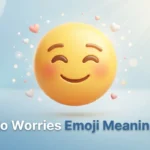
Have you ever received a message like “No worries 😊” and wondered what the emoji adds to the conversation? The no worries emoji is often used to make a message feel warmer, friendlier, and more relaxed. It can turn a simple “It’s okay” into something that sounds more caring and positive.
People use emojis every day to express feelings that can be difficult to show with plain text. A small emoji can make a message sound cheerful, supportive, playful, or even slightly sarcastic.
The exact emoji used for “no worries” can vary. There is no single official emoji called the “no worries emoji.” Instead, people commonly use emojis such as 😊, 🙂, 😌, 👍, or 🤗 to communicate the idea of “It’s okay,” “Don’t worry,” or “No problem.”
The meaning can also change depending on the context, platform, and relationship between the people chatting. A friendly 😊 from a close friend may feel different from the same emoji in a workplace message.
In this guide, we’ll explore the no worries emoji meaning, its different uses, text examples, social media meanings, emoji combinations, and similar emojis.
What Does No Worries Emoji Mean?
The no worries emoji usually communicates reassurance, calmness, friendliness, or acceptance. It tells someone that a problem is not serious and that they do not need to feel guilty or concerned.
For example:
“Sorry I’m late!”
“No worries 😊”
Here, 😊 makes the response feel warm and forgiving.
The emoji can also mean “That’s fine,” “It’s okay,” “Don’t stress,” or “No problem.” The exact emotion depends on the emoji selected.
Common situations include:
- Reassuring someone after a mistake
- Accepting an apology
- Saying that something is not important
- Making a conversation feel relaxed
- Responding positively to a small inconvenience
- Showing patience
- Ending a minor disagreement
- Making a short reply sound friendlier
The text meaning becomes especially clear when the emoji appears beside words such as “okay,” “fine,” “no problem,” or “don’t worry.”
Different Meanings of No Worries Emoji
The no worries emoji can have several meanings depending on the conversation.
General Meaning
Generally, it means “It’s okay” or “Don’t worry about it.” It can show that you are not upset about something.
Example:
“I forgot to send the file.”
“No worries 👍”
Romantic Meaning
In a romantic conversation, a warm emoji such as 😊 or 🤗 can make “no worries” sound caring and affectionate.
“Sorry I couldn’t call earlier.”
“No worries 😊❤️”
The combination can suggest patience and emotional warmth.
Friendly Meaning
Among friends, it usually means there are no hard feelings.
“I accidentally deleted your message.”
“Haha, no worries 😂”
Funny Meaning
A laughing emoji can make the response humorous.
“I ate the last slice of pizza. Sorry!”
“No worries 😂”
Here, the speaker may be joking rather than seriously reassuring the other person.
Sarcastic Meaning
Sometimes “no worries” can be sarcastic. Context is very important.
“I forgot your birthday again.”
“No worries 🙂”
Depending on the relationship, the smiling emoji could be genuine or could suggest hidden frustration.
Social Media Meaning
On social media, emojis often make short comments more expressive. A no worries-style emoji can appear in comments, replies, captions, and direct messages.
Text Message Meaning
In texting, it can quickly communicate forgiveness or acceptance without requiring a long response.
“Can we talk tomorrow?”
“Sure, no worries 😊”
Workplace Meaning
At work, a simple 👍 or 🙂 can make “No worries” sound professional and approachable.
“Sorry for the delay.”
“No worries. 👍”
However, in formal communication, clear words are usually better than relying only on emojis.
When Should You Use No Worries Emoji?
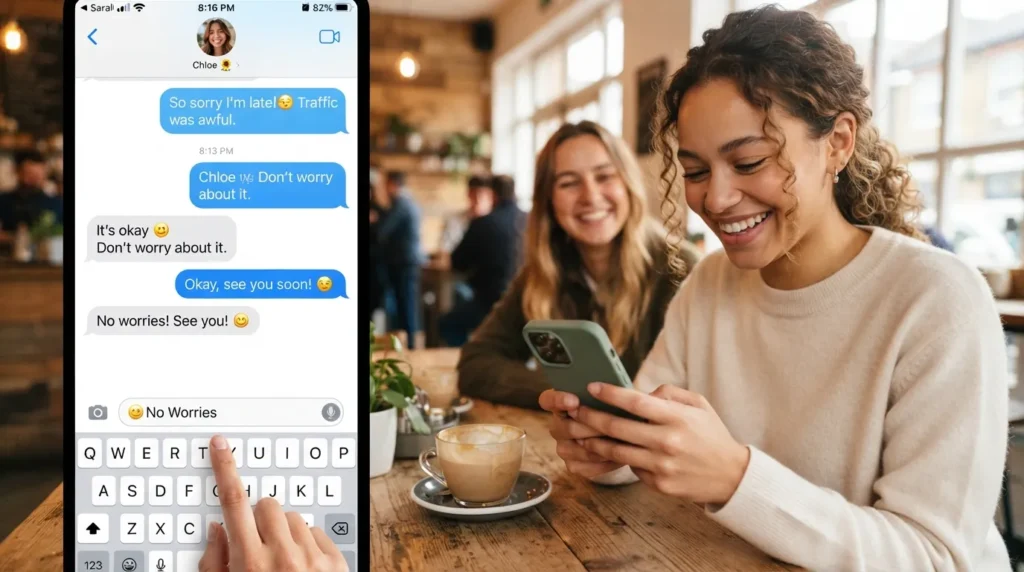
You can use a no worries emoji when you want to reassure someone or show that you are comfortable with a situation.
Good situations include:
- Someone apologizes for being late.
- A friend says they cannot meet today.
- Someone makes a small mistake.
- A person asks to reschedule plans.
- Someone thanks you for helping them.
- You want to show that you are not upset.
- You want to make a short reply sound warmer.
- You want to keep a casual conversation positive.
Texting Examples
Example 1:
“Sorry, I forgot to reply.”
“No worries 😊”
Example 2:
“I’ll send it tomorrow instead.”
“No worries 👍”
Example 3:
“Sorry for asking so many questions.”
“No worries! 🤗”
Example 4:
“I can’t make it tonight.”
“No worries 🙂”
The best emoji depends on the emotion you want to communicate.
What Does No Worries Emoji Mean from a Girl?
When a girl uses a no worries-style emoji, it commonly means that she is genuinely okay with the situation. A warm emoji can make the response feel friendly, comfortable, and positive.
For example:
“Sorry, I disappeared yesterday.”
“No worries 😊”
This usually sounds forgiving and relaxed.
However, one emoji cannot prove romantic interest. If she adds ❤️, 😊, 🥰, or other affectionate emojis, the conversation may feel warmer, but the overall context matters more than one symbol.
A girl might also use the emoji simply because she wants to avoid making the conversation awkward.
What Does No Worries Emoji Mean from a Boy?
When a boy uses a no worries emoji, it usually means he is saying that everything is fine. He may be accepting an apology, showing patience, or keeping the conversation casual.
For example:
“Sorry I couldn’t come.”
“No worries 👍”
This generally means he is not bothered.
If he uses 😊 or 🤗, the message may sound friendlier or more caring. If he uses 😂, it could make the response more playful.
Again, the relationship and conversation matter more than the emoji alone.
No Worries Emoji on Snapchat
On Snapchat, emojis are commonly used in quick conversations, replies, and snaps. A no worries-style emoji can make a short response feel more relaxed.
For example:
“Sorry, I opened your snap late.”
“No worries 😊”
Because Snapchat conversations are often casual, emojis can help communicate tone quickly.
A 👍 may feel simple and direct, while 😊 can feel warmer. 😂 can make the response playful.
No Worries Emoji on WhatsApp
WhatsApp emojis are frequently used to soften everyday messages. Someone might write “No worries 😊” after receiving an apology or change of plans.
For example:
“I’ll be 20 minutes late.”
“No worries 👍”
In family and friend chats, 🤗 may show extra warmth, while 😌 can suggest calmness.
The no worries emoji can also be useful when you want to avoid making a conversation sound too formal.
No Worries Emoji on Instagram
Instagram emojis appear in comments, DMs, Stories, and reactions. A no worries-style emoji can help keep interactions positive.
For example:
“Sorry, I missed your DM!”
“No worries 😊”
In Instagram comments, a simple 👍 or 😊 can communicate acceptance without needing a long reply.
The meaning can change depending on whether the emoji appears in a private DM, public comment, or reaction.
No Worries Emoji on TikTok
TikTok emojis are often playful and expressive. A no worries-style emoji can appear in comments, replies, captions, or private messages.
For example:
“Sorry for tagging you!”
“No worries 😂”
Here, 😂 makes the response feel humorous.
In a more serious conversation, 😊 or 🙂 may be more appropriate because they communicate friendliness without making fun of the situation.
Emoji Combinations
Emoji combinations can add extra emotion to a “no worries” message. Here are some common examples:
| Emoji Combination | Meaning |
| 😊👍 | It’s okay, no problem |
| 🙂👍 | Calm and casual acceptance |
| 😌👍 | Relax, everything is fine |
| 🤗😊 | Warm reassurance |
| 😊❤️ | Caring and affectionate reassurance |
| 😄👍 | Cheerful acceptance |
| 😂👍 | Playful “no worries” |
| 😅😊 | It’s okay, these things happen |
| 🙌😊 | Positive and supportive |
| 🫶😊 | Caring and supportive |
| 😎👍 | Relaxed and confident |
| 🙂✨ | Positive and peaceful |
| 🤝😊 | Friendly agreement |
| 😁👍 | Happy acceptance |
| ❤️👍 | Supportive and caring |
Remember that combinations do not have one fixed definition. The surrounding message determines the final meaning.
Copy and Paste No Worries Emoji
Want a quick copy and paste emoji for your messages? Here are some options:
😊 Copy
🙂 Copy
😌 Copy
👍 Copy
🤗 Copy
😊👍 Copy
🙂👍 Copy
😌👍 Copy
😊❤️ Copy
😂👍 Copy
🤗😊 Copy
🫶😊 Copy
You can combine these with words such as “No worries,” “It’s okay,” “Don’t worry,” or “No problem.”
Similar Emojis
Several emojis can communicate emotions similar to the no worries emoji.
| Emoji | Name | Meaning | Difference |
| 😊 | Smiling Face with Smiling Eyes | Warm happiness | More friendly and cheerful |
| 🙂 | Slightly Smiling Face | Mild positivity | More neutral |
| 😌 | Relieved Face | Calm and relief | Stronger feeling of relaxation |
| 👍 | Thumbs Up | Approval or agreement | More direct |
| 🤗 | Hugging Face | Warmth and support | More affectionate |
| 😄 | Grinning Face with Smiling Eyes | Happiness | More energetic |
| 😁 | Beaming Face | Excitement or happiness | Brighter and stronger |
| 😅 | Grinning Face with Sweat | Nervous relief | Often suggests an awkward situation |
| 😂 | Face with Tears of Joy | Strong amusement | Mainly humorous |
| 🫶 | Heart Hands | Love and support | More affectionate |
| ❤️ | Red Heart | Love or care | Stronger emotional meaning |
| 🙌 | Raising Hands | Celebration or support | More enthusiastic |
Choosing the right emoji depends on whether you want to sound calm, friendly, funny, supportive, or affectionate.
Emoji Appearance Across Platforms
Emojis can look slightly different depending on the device or platform. The basic meaning usually remains similar, but facial expressions, colors, shapes, and details can vary.
Apple
Apple emojis have a polished and detailed appearance. A smiling emoji may have subtle facial details that make it look warm and expressive.
Android
Android devices may display emojis differently depending on the operating system and manufacturer. Google’s emoji designs can have their own visual style.
Samsung
Samsung has its own emoji designs, so the same emoji may look slightly different from its Apple or Google version.
Windows
Windows uses Microsoft’s emoji designs. The appearance may differ in facial details and overall style.
Facebook and its related services may display emojis using designs that can vary across apps and devices.
WhatsApp emojis can look different depending on the device being used. A person sending an emoji from an iPhone may see a different design from someone viewing it on Android.
These visual differences normally do not change the basic emoji meaning.
Fun Facts
Here are eight interesting facts about the no worries emoji concept and digital communication:
- There is no single official Unicode emoji named “No Worries.”
- People use several different emojis to communicate the idea of reassurance.
- Context can completely change how an emoji is interpreted.
- A thumbs-up emoji can sometimes mean “okay” without any words.
- Smiling emojis can make short text messages feel warmer.
- The same emoji may look different on different devices.
- Emoji combinations can communicate more emotion than one emoji.
- A smiling emoji can occasionally sound sarcastic when used in the wrong context.
Common Mistakes
One common mistake is assuming that every smiling emoji means happiness. In reality, emojis can express many different emotions depending on the conversation.
Another mistake is using an overly cheerful emoji in a serious situation. For example, 😂 may feel inappropriate if someone is discussing a genuinely difficult problem.
People also sometimes assume that an emoji automatically shows romantic interest. A 😊 or ❤️ may feel affectionate, but it does not always mean someone has romantic feelings.
Using too many emojis can also make a professional message look less formal. In workplace communication, simple emojis such as 👍 or 🙂 are usually easier to understand.
Finally, remember that emoji meanings can differ between people and cultures. When in doubt, look at the complete message rather than interpreting one emoji by itself.
FAQs:
What does the no worries emoji mean?
The no worries emoji usually means “It’s okay,” “Don’t worry,” or “No problem.” Common choices include 😊, 🙂, 😌, and 👍. The exact meaning depends on the surrounding text, the relationship between the people, and the situation.
Is there an official no worries emoji?
No, there is not one official Unicode emoji specifically called the “no worries emoji.” People use different emojis to express reassurance, including 😊, 🙂, 😌, 👍, and 🤗. The best choice depends on whether you want to sound friendly, calm, supportive, or casual.
What emoji means “no problem”?
Several emojis can communicate “no problem,” including 👍, 😊, 🙂, and 😌. A thumbs-up often sounds direct and casual, while 😊 can feel warmer. In a supportive conversation, 🤗 may communicate extra friendliness and reassurance.
What does 😊 mean in a text?
😊 is commonly used to express happiness, friendliness, warmth, or appreciation. In a message such as “No worries 😊,” it can make the response sound kind and reassuring. However, its exact text meaning depends on the conversation and the relationship between the people.
Does the no worries emoji mean someone is not angry?
Usually, a no worries-style emoji suggests that the person is calm or not upset. However, emojis can sometimes be used sarcastically. If the surrounding conversation seems tense, the emoji may not be completely genuine. Always consider the full message before deciding what the person means.
What does no worries 😊 mean from a girl?
“No worries 😊” from a girl usually means she is saying that something is okay and that she is not making a big deal about it. The smiling emoji adds warmth. It does not automatically indicate romantic interest; the overall conversation provides better clues.
What does no worries 👍 mean from a boy?
“No worries 👍” from a boy generally means that he accepts the situation and is not concerned. The thumbs-up makes the message short and direct. Depending on the conversation, it can simply mean “Okay,” “No problem,” or “That’s fine.”
Can no worries emojis be sarcastic?
Yes. Any emoji can be interpreted differently depending on context. For example, “No worries 🙂” after a repeated mistake could potentially sound sarcastic. If the conversation has tension, the emoji may be used to hide frustration rather than express genuine reassurance.
Conclusion
The no worries emoji is a simple way to make digital conversations feel calmer, friendlier, and more positive. While there is no single official emoji for “no worries,” emojis such as 😊, 🙂, 😌, 👍, and 🤗 are commonly used to communicate the idea.
The right choice depends on your message and the emotion you want to express. Use 😊 for warmth, 👍 for simple approval, 😌 for calmness, and 🤗 for extra support.
Most importantly, remember that emoji meanings depend on context. A single emoji does not tell the whole story. Whether you are using WhatsApp emojis, Instagram emojis, TikTok emojis, or everyday text messages, choose an emoji that matches the mood of the conversation.
When used naturally, a small emoji can make “No worries” feel much more human and reassuring.

I’m Ethan Blake, the author behind EmojiInsight.com, where I explore emoji meanings, interpretations, and the hidden emotions behind everyday digital expressions. I created EmojiInsight.com to help people understand what emojis really mean and how they are commonly used in chats, texts, and social media.