Have you ever seen a signature emoji in a message and wondered what the sender was trying to say? Maybe it appeared after a name, at the end of a caption, or beside a short message. At first, it can feel confusing because an emoji can add emotion without using many words.
The signature emoji can be used to make messages feel more personal, expressive, playful, or memorable. Its exact emoji meaning, however, depends on the emoji itself and how the sender uses it.
Context matters a lot. The same emoji may feel romantic in a private chat, friendly in a group conversation, or sarcastic on social media. Its appearance can also vary slightly between Apple, Android, Samsung, Windows, Facebook, and other platforms.
In this guide, we will explore common emoji meanings, text meaning, social media uses, emoji combinations, and copy-and-paste examples. Whether you found one on WhatsApp, Snapchat, Instagram, or TikTok, this guide will help you understand the message behind it.
What Does Signature Emoji Mean?
A signature emoji is an emoji that someone regularly uses as part of their personal communication style. It can almost feel like a digital signature because the person uses the same symbol again and again.
For example, someone might frequently end messages with 😊, ❤️, ✨, or 😎. Over time, friends may recognize that emoji as part of that person’s texting style.
The primary meaning depends on which emoji is being used. A heart may show affection, a smiling face may show friendliness, and sparkles may add excitement or a positive feeling.
Common situations
People may use a signature emoji:
- At the end of text messages
- In social media captions
- In Instagram comments
- In TikTok descriptions
- In WhatsApp conversations
- Beside their name or profile
- To make a message feel warmer
- To show personality without extra words
For example:
“See you tomorrow 😊”
Here, the emoji makes the message sound warmer and friendlier.
Another example:
“That was amazing ✨”
The sparkles add excitement and emphasis.
Different Meanings of Signature Emoji
General Meaning
A signature emoji often represents someone’s personality or communication habit. It may become a symbol people associate with that person.
Romantic Meaning
In romantic conversations, a frequently used emoji can create a softer or more affectionate tone.
For example:
“Goodnight ❤️”
The heart can make a simple sentence feel loving.
Friendly Meaning
Friends often use emojis to make ordinary messages feel more relaxed.
“You coming with us? 😎”
The emoji gives the message a casual and confident feeling.
Funny Meaning
Some people repeatedly use a particular emoji because they think it is funny or matches their sense of humor.
“I definitely didn’t eat the last slice 😂”
Sarcastic Meaning
An emoji can sometimes make sarcasm easier to recognize.
“Great, another meeting 🙃”
The upside-down face can suggest frustration or ironic humor.
Social Media Meaning
On social media, emojis can add personality to captions, comments, usernames, and bios. They can also make short posts more visually interesting.
Text Message Meaning
In texting, an emoji can change the emotional tone of a sentence. A plain “Okay” may sound serious, while “Okay 😊” can sound warmer.
Workplace Meaning
Some emojis are suitable for casual workplace chats, while others may be too personal. Simple symbols such as 👍, 😊, or ✅ are often easier to understand in professional conversations.
When Should You Use Signature Emoji?
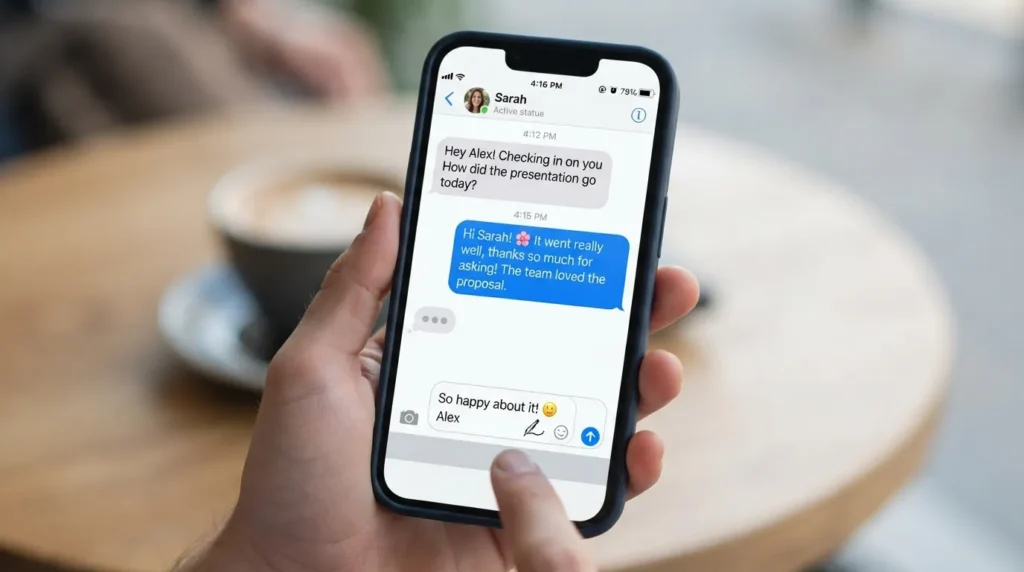
You can use a signature emoji whenever it naturally matches your personality and the conversation.
Good situations include:
- Ending a friendly text: “Talk soon 😊”
- Showing excitement: “I got the tickets! 🎉”
- Showing appreciation: “Thanks so much! 🙌”
- Adding humor: “I forgot my keys again 😂”
- Making a caption more expressive: “Weekend mood ✨”
- Supporting a compliment: “You look great 🔥”
- Making a casual reply warmer: “Sure thing 👍”
Try not to use an emoji when its meaning could confuse the reader.
For example:
“I am sorry about what happened 😂”
The laughing emoji may make the message appear insensitive unless the context clearly explains the joke.
What Does Signature Emoji Mean from a Girl?
When a girl repeatedly uses a particular emoji, it does not automatically mean she has romantic feelings. It may simply be part of her normal texting style.
For example, if she often sends:
“Thank you 😊”
the emoji may simply show friendliness.
However, context can add another layer. If she uses affectionate emojis during a personal conversation, they may suggest warmth or emotional closeness.
Consider the whole message, the relationship, and her usual communication style rather than interpreting one emoji alone.
Examples
“You actually remembered! 🥹”
This may show genuine appreciation or emotional warmth.
“Stoppp 😂”
This usually suggests playful amusement.
“Goodnight ❤️”
Depending on the relationship, the heart may express affection.
What Does Signature Emoji Mean from a Boy?
A boy may also use a signature emoji simply because he likes it or uses it frequently.
For example:
Here, the emoji mainly adds humor.
In a romantic conversation, however, an emoji may help communicate affection or playfulness.
“See you tonight 😉”
The wink can create a teasing or flirtatious tone.
Again, the best interpretation comes from the full conversation rather than the emoji alone.
Signature Emoji on Snapchat
Snapchat is highly visual, so emojis can play an important role in communication. Users may use them in captions, messages, stories, and reactions.
Snapchat also has platform-specific emoji features that can communicate information about interactions or relationships.
If someone repeatedly uses the same emoji in their messages, it may simply be their personal style.
For example:
“That snap was hilarious 😂”
The emoji reinforces the funny tone.
Signature Emoji on WhatsApp
WhatsApp emojis are commonly used in private chats, family groups, work groups, and community conversations.
A signature emoji can help make short WhatsApp messages feel less cold.
For example:
“I’ll call you later 👍”
The thumbs-up makes the reply sound clear and casual.
Another example:
“Miss you ❤️”
The heart adds emotional meaning that would not be as obvious in plain text.
Signature Emoji on Instagram
Instagram emojis appear frequently in captions, comments, bios, DMs, and Stories.
Instagram emojis can make captions easier to scan and help express feelings quickly.
For example:
“Best day ever ✨”
Or:
“You killed this look 🔥”
The meaning depends on the surrounding text and the relationship between the users.
Signature Emoji on TikTok
TikTok emojis are often used with captions, comments, replies, and direct messages. TikTok users may also combine emojis with slang, memes, and trending expressions.
For example:
“This is too accurate 😂”
Or:
“Main character energy ✨”
Because TikTok communication can be playful and trend-driven, an emoji may have a humorous meaning that is different from its traditional interpretation.
Emoji Combinations
Combining emojis can create a stronger or more specific message.
| Emoji Combination | Meaning |
| 😊❤️ | Warm affection |
| 😂😭 | Laughing extremely hard |
| 😍❤️ | Strong admiration or love |
| 😉❤️ | Playful affection |
| 🔥😍 | Very attractive or impressive |
| 🥹❤️ | Emotional affection |
| 🙌✨ | Celebration or excitement |
| 😎🔥 | Cool and impressive |
| 😂💀 | Extremely funny |
| 🥰💕 | Sweet affection |
| 😭❤️ | Emotional love or appreciation |
| 🤦♂️😂 | Funny mistake |
| 👀✨ | Interest or attention |
| 👍😊 | Friendly agreement |
| 🎉🥳 | Celebration |
| ❤️✨ | Love and positivity |
| 😏😉 | Flirty or teasing mood |
Remember that emoji combinations can have different meanings depending on the conversation.
Copy and Paste Signature Emoji
Here are simple copy-and-paste emoji examples:
😊 Copy
❤️ Copy
✨ Copy
🔥 Copy
😂 Copy
🥰 Copy
😍 Copy
😉 Copy
😎 Copy
🥹 Copy
😊❤️ Copy
😂😭 Copy
😍❤️ Copy
🥰💕 Copy
✨❤️ Copy
🔥😍 Copy
😎✨ Copy
Similar Emojis
Different emojis can communicate similar emotions, but their emotional strength and tone may vary.
| Emoji | Name | Meaning | Difference |
| 😊 | Smiling Face with Smiling Eyes | Warm happiness | Gentle and friendly |
| 🙂 | Slightly Smiling Face | Mild positivity | More neutral |
| 😄 | Grinning Face with Smiling Eyes | Happiness | More energetic |
| 😃 | Grinning Face | Cheerfulness | Open and positive |
| 😍 | Smiling Face with Heart-Eyes | Strong admiration | More romantic |
| 🥰 | Smiling Face with Hearts | Affection | Softer and sweeter |
| 😉 | Winking Face | Playfulness | Can be teasing |
| 😎 | Smiling Face with Sunglasses | Confidence | Cool and casual |
| 😂 | Face with Tears of Joy | Strong laughter | Clearly humorous |
| 🤣 | Rolling on the Floor Laughing | Extreme laughter | Stronger than 😂 |
| ❤️ | Red Heart | Love | More direct affection |
| ✨ | Sparkles | Excitement or emphasis | Adds visual energy |
Emoji Appearance Across Platforms
Emoji designs are not identical everywhere. Apple, Android, Samsung, Windows, Facebook, and WhatsApp may display the same Unicode emoji with different artwork.
Apple
Apple emojis often have detailed, polished designs. Their appearance may differ noticeably from Android or Windows versions.
Android
Android devices can display emojis through Google’s emoji designs, although the exact appearance may vary by operating system version and device.
Samsung
Samsung uses its own emoji designs on many devices. Some expressions can look slightly different from Apple’s version.
Windows
Windows emojis have their own visual style. The same emoji may appear simpler or more graphic compared with mobile versions.
Facebook can display emojis in its own interface and may use platform-specific visual treatments.
WhatsApp supports standard Unicode emojis while displaying them through its own platform experience. The same emoji may look different when copied from another app.
These visual differences do not usually change the basic Unicode meaning, but they can affect how an emoji feels emotionally.
Fun Facts
Here are eight interesting emoji facts:
- Emojis originated as a way to add visual emotion to digital communication.
- The word “emoji” comes from Japanese.
- Emoji characters are standardized through Unicode.
- The same emoji can have different artwork across platforms.
- Emojis can change the emotional tone of short messages.
- People often create personal emoji habits without realizing it.
- Combining emojis can create meanings that are different from individual symbols.
- Emojis are now common across messaging apps and social media platforms.
Common Mistakes
One of the biggest emoji mistakes is assuming that every person uses an emoji in exactly the same way.
A smile may mean genuine happiness to one person but simple politeness to another. A wink can be playful, sarcastic, or flirtatious depending on the conversation.
Another mistake is focusing on one emoji while ignoring the words around it.
For example:
“Fine 🙃”
The emoji could suggest frustration or irony, even though the word “Fine” sounds positive by itself.
People also sometimes use outdated interpretations. Emoji meanings can evolve through internet culture, memes, and social media trends.
The safest approach is to consider the text meaning, relationship, context, and the sender’s usual communication style.
FAQs:
What is a signature emoji?
A signature emoji is an emoji someone regularly uses as part of their personal communication style. It can appear in texts, captions, comments, or social media posts. Over time, friends may recognize the emoji as something strongly associated with that person’s personality or way of communicating.
Can a signature emoji have a romantic meaning?
Yes, it can, but not always. Romantic meaning depends on the emoji, message, relationship, and context. Hearts, kissing faces, and affectionate expressions may suggest romance, while a simple smile may only show friendliness. Never assume romantic interest from one emoji without considering the complete conversation.
What does a signature emoji mean in texting?
In texting, a signature emoji usually adds personality or emotional tone to a message. It can make a sentence feel warmer, funnier, more excited, or more casual. Its exact meaning depends on the emoji and the words surrounding it, so context is especially important.
Do emoji meanings change on different platforms?
The artwork can change across Apple, Android, Samsung, Windows, Facebook, and WhatsApp. Although the basic Unicode character generally has the same intended meaning, visual differences can affect how people perceive it. Some emojis may therefore feel slightly different depending on the device or app being used.
Can girls and boys use signature emojis differently?
Sometimes people develop different texting habits, but there is no universal rule that girls or boys use an emoji in one specific way. Personal style matters much more. The same emoji can mean friendship, humor, affection, sarcasm, or simple habit depending on the individual and conversation.
What are the best emoji combinations?
The best emoji combinations depend on what you want to express. For affection, combinations such as ❤️✨ or 🥰💕 can work well. For humor, 😂😭 is common. For excitement, 🎉🥳 is useful. Always choose combinations that match your message instead of adding emojis randomly.
How can I copy and paste an emoji?
You can copy an emoji directly from a message, website, or emoji list and paste it into a compatible app. On most devices, you can also open the built-in emoji keyboard. The copy-and-paste process may vary slightly between operating systems and applications.
Why does the same emoji look different on my phone?
Emoji artwork is created by individual platforms and operating systems. Apple, Google, Samsung, Microsoft, Facebook, and other companies may design their own versions of the same Unicode character. As a result, the emoji can have different facial expressions, colors, shapes, or details while keeping its basic identity.
Conclusion
A signature emoji is more than a small picture in a message. When someone uses the same emoji repeatedly, it can become part of their personal communication style and even feel like a digital signature.
Still, emoji meanings are not fixed in every conversation. Context, platform, relationship, tone, and internet culture can all influence interpretation.
If you are using WhatsApp emojis, Instagram emojis, TikTok emojis, or simple copy-and-paste emoji combinations, choose symbols that support the message you want to send.
When in doubt, look at the whole conversation rather than trying to decode one emoji by itself. That simple habit can help you understand emoji meanings more accurately and avoid unnecessary misunderstandings.

I am Ryan Mitchell, the author and creator of EmojiInsight.com, a helpful website dedicated to explaining emoji meanings, interpretations, symbols, and everyday digital expressions. At EmojiInsight.com, I share simple and easy-to-understand insights to help readers better understand what different emojis mean and how they are commonly used in texts, social media, and online conversations.